
Church Planting & Pastoral Ministry Certificate

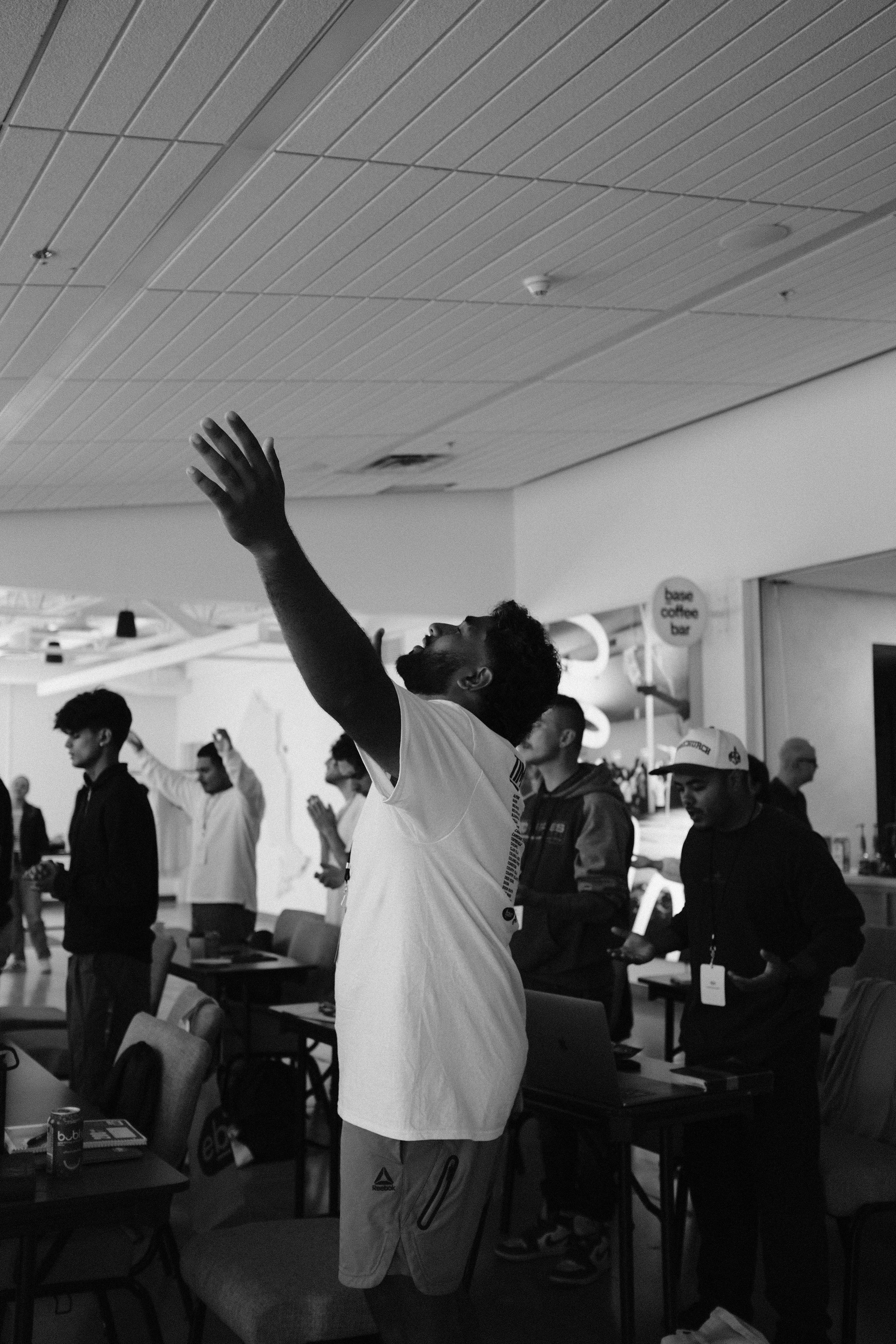
The Church Planting & Pastoral Ministry Certificate is a collaborative one-year accelerator for pastors, church planters, and ministry leaders seeking faithful and fruitful church ministry in Canada. This program integrates theological depth with real ministry practice, preparing leaders to faithfully lead and plant churches, preach the gospel, shepherd people, and steward the organizational and spiritual life of a growing church community.
Everything you need to know~
Still have questions? Take a look at the FAQ or reach out anytime. If you’re feeling ready, go ahead and apply.
-
Across Canada, there is a growing shortage of lead pastors—creating an urgent need for healthy, equipped leaders to step into ministry and lead churches forward. This program was created in direct response to that need.
Over the past year, we’ve met with pastors and church leaders from across the country who share a common burden: to see more leaders raised up, released, and ready to pastor and plant with confidence. Together, we asked a simple question—what does someone need to learn and experience in an accelerated, one-year program to be prepared for real ministry?
This CPPM program is the result.
Designed to form both the heart and skill of a leader, it equips participants with the theological depth, pastoral strength, and practical tools needed to lead healthy churches and plant new ones across Canada.
-
The Church Planting & Pastoral Ministry Certificate is a collaborative one-year accelerator for pastors, church planters, and ministry leaders seeking faithful and fruitful church ministry in Canada. This program integrates theological depth with real ministry practice, preparing leaders to faithfully lead and plant churches, preach the gospel, shepherd people, and steward the organizational and spiritual life of a growing church community.
-
Program Breakdown (30 credits)
Bible and Theology (12 credits)
General Studies (9 credits)
Professional Studies (9 credits)
Course List
Intermediate Doctrine & Theology
Pastoral Care & Leading Through Crisis
Intermediate Hermeneutics
Roots of Renewal: History & Leadership of the Church in Canada
Evangelism and Church Growth
Ministry Practicum I
Building Church Well
Homiletics: The Art & Skill of Biblical Preaching
Worldview & Apologetics
Discipleship Strategy & Leadership Development
Accounting & Data Management for Churches
Ministry Practicum II
-
This program is offered through a flexible delivery model, combining in-person and on-demand options so ministry leaders and pastors can continue serving & working where they are, while completing the program.
In Person
Join us on campus for a fully immersive learning experience made up of one week intensives. Engage face-to-face with faculty and peers, participate in live discussions, and be part of the community in real time.
On Demand
Access course content on your own schedule. Watch lectures, complete assignments, and move through the material at a pace that works for you while staying on track with course requirements.
-
Tuition Breakdown:
Enrolling
$10,950
This is based on taking 15 credits/semester (excluding compulsory fees). This is based on taking 15 credits/semester. Tuition is $365 per credit.Auditing
$225
This is per course with no additional fees.
Scholarships are available and you can learn more here.
-
All applicants must demonstrate the following in the application from, or provide separately as part of the application process:
A commitment to following Jesus and to the pursuit of spiritual maturity
A commitment to worship and serve alongside a local body of Christ-followers through participation in a local church
A minimum high-school diploma (or equivalent) and a grade-average of 65%
Proficiency in spoken and written English as demonstrated in the completion of ENG4U, ENG4M, or ENG4C with a 65%
All applicants must...
Complete the application form
Provide an official high-school transcript
Provide one pastoral reference
Fill out the residence application (if applicable)
Learn more about our admissions process here.
Disclaimer: If something comes to the attention of our admissions committee that puts the character of the applicant in question, Emmanuel Bible College has the right to deny acceptance to the college.
Course List
Intermediate Doctrine & Theology
This course deepens students’ understanding of the core doctrines of the Christian faith and their implications for pastoral leadership and congregational health. BTH 202 transitions from "what" we believe to "why" and "how" those beliefs shape the Christian life and the local church. This course provides a rigorous mid-level exploration of key doctrinal categories, moving beyond basic definitions to examine historical development, biblical defense, and contemporary challenges. Special emphasis is placed on equipping pastors to teach doctrine clearly and shepherd congregations toward theological maturity.
Pastoral Care & Leading Through Crisis
Life’s crises—broken relationships, abuse, loss, illness, conflict, and tragedy—affect every church community. This course prepares students to lead and minister with both sensitivity and strength when people face deep struggles. Students will learn a biblical framework for crisis intervention, how to respond practically and pastorally to trauma, and how to cultivate a healing environment within the local church. Special attention will be given to navigating complex emotional, legal, and spiritual issues with wisdom and grace. Since pastoral care for others is only possible when the pastor is also consistently caring for themselves, this course will examine self-care from a biblical perspective while drawing from practitioner experience and academic research.
Intermediate Hermeneutics
This course will emphasize understanding the historical-cultural and literary contexts of the texts. Key topics include genre analysis, the problem of meaning and authorial intent, principles for moving from exegesis (what the text meant) to hermeneutics (what it means today), and how to theological themes across scripture. Students will apply these skills to contemporary ethical and doctrinal issues.
Through this course, students will be able to exegete texts with greater precision, critically assess interpretive claims, and articulate a coherent interpretive framework for their own study and life. The course emphasizes how careful interpretation of Scripture forms the foundation for effective preaching, discipleship, and church leadership.
Roots of Renewal: History & Leadership of the Church in Canada
This course surveys the pivotal leaders, theological movements, and cultural shifts that have shaped the North American church, with a primary focus on the Canadian experience. Beyond a chronological study, students will analyze the leadership lessons embedded within church history—examining how theological clarity, spiritual renewal, and institutional challenges impact successive generations.
Specific attention is given to the heritage of Canadian revivalism and the historical trajectory of church planting across the provinces. By studying these patterns, students will learn to integrate historical themes of resilience and innovation into their own ministry or church-planting contexts.
Evangelism & Church Growth
This course equips leaders to build churches that are both theologically grounded and culturally accessible. Moving beyond traditional methods, students will investigate how creative branding, strategic marketing, and community engagement serve the greater goal of evangelism.
The course provides a roadmap for the entire "seeker journey"—from the initial invitation to the first-time guest experience and into a clear pathway for discipleship. Whether through personal relational outreach or curated church environments, students will learn to foster a missional culture that values both the proclamation of the Gospel and the long-term spiritual transformation of their city.
Church Planting
Building a healthy, growing church requires a dual commitment to spiritual vitality and organizational excellence. This course provides a comprehensive roadmap for church planting and revitalization, grounded in a biblical vision of the local church. Students will explore the leadership principles necessary to cultivate a thriving congregational culture while navigating the unique challenges of the Canadian ministry context, such as cultural secularization and community engagement.
Through a blend of theological reflection and practical strategy, students will learn to cast vision, develop core teams, and establish sustainable structures for long-term health.
Homiletics: The Art & Skill of Biblical Preaching
This course provides a comprehensive introduction to the theology, theory, and practice of Christian preaching. Students will explore the biblical foundations of the homiletical task, learning to bridge the gap between faithful scriptural interpretation and compelling communication for contemporary audiences. The curriculum balances the technical "art" of exegetical sermon preparation with the "skill" of dynamic delivery.
Key areas of focus include structuring effective outlines, understanding and developing one’s unique pastoral voice, and crafting messages that remain contextually relevant across various ministry settings. Through a process of researching, preparing, and delivering original sermons, students will receive constructive feedback designed to foster growth as Spirit-led preachers who speak with theological depth, pastoral clarity, and transformative power.
Worldview & Apologetics
This course provides an in-depth examination of the Christian worldview as a comprehensive framework for reality, knowledge, and value. Students will move beyond cultural discernment to the systematic study of competing worldviews—such as naturalism and postmodernism—learning to deconstruct their claims in light of the biblical narrative.
The curriculum integrates classical and contemporary apologetics, equipping students with robust rational defenses for the existence of God, the reliability of Scripture, and the Resurrection. Special emphasis is placed on "pastoral apologetics," training leaders to respond to complex objections regarding morality, suffering, and truth with intellectual integrity and grace. This course transforms missional awareness into a sophisticated toolkit for engaging the secular Canadian mind.
Discipleship Strategy & Leadership Development
Healthy churches are sustained by the dual engines of intentional discipleship and robust leadership development. This course equips students to design strategic pathways that move believers from spiritual infancy to mature, reproducing leadership. By exploring biblical models of formation and multiplication, students will learn to build integrated systems that drive both congregational health and missional expansion.
The curriculum balances the "how-to" of spiritual formation with the practical mechanics of a leadership pipeline. Students will develop frameworks to identify, mentor, and deploy emerging leaders, ensuring that discipleship remains the central driver of church life. Designed for church planters, this course provides the tools to transform a congregation into a self-sustaining community of equipped, Spirit-led influencers.
Mathematics for Accounting & Data Management
This course provides a foundational study of mathematics and statistics through the lens of ecclesiastical administration and data management. Students will develop quantitative literacy by mastering the algebraic and arithmetic principles required for professional accounting, fund management, and multi-year budget forecasting.
The curriculum transitions from financial computation to applied statistics, teaching students how to collect, organize, and interpret congregational data. By applying probability and statistical inference to ministry trends—such as attendance patterns, demographic shifts, and giving cycles—students will learn to make data-informed decisions that support long-term organizational health. This course equips leaders to steward church resources with technical precision, transparency, and biblical wisdom.
Ministry Practicum
This advanced practicum places students in a supervised ministry environment to bridge the gap between theological education and high-level leadership practice. Moving beyond basic participation, students will take on increased responsibility within a local church or ministry organization, engaging in core functions such as preaching, discipleship oversight, pastoral care, and strategic leadership meetings.
The course emphasizes the development of the "culture-setting leader"—one who understands how to cultivate spiritual vitality, mission, and leadership multiplication within a community. Through hands-on experience and structured reflection, students will sharpen their ministry competencies and foster deeper discernment regarding their vocational calling. Supported by guided mentoring, this practicum is designed to equip Spirit-led leaders to serve with the maturity, confidence, and theological integration required for effective long-term ministry.
Theological education for everyone.
Our Church Planting & Pastoral Ministry (CPPM) program is made up of Ministry Masterclasses. These week-long intensives can be taken as part of the certificate or audited individually, making theological education accessible to anyone looking to grow in ministry.
Our programs are intentionally designed to build on one another, creating a clear and meaningful pathway for growth. For example, our Bachelor of Theology program includes Delta as your first year and the Church Planter and Pastoral Ministry Certificate as your second year. However, at the same time, each certificate program can also stand on its own, giving you the flexibility to take Delta as a foundational year or step directly into the Church Planter and Pastoral Ministry Certificate, depending on where you are in your journey.
Our Laddered Approach
More about Ministry Practicums:


Ministry practicums are at the heart of the EBC experience. They’re what set us apart—giving students the opportunity to move beyond classroom learning and put their knowledge into practice in real ministry settings.
Through hands-on ministry experience, you'll develop practical skills, discover your strengths, and gain valuable insight into where God may be calling you to serve. Whether you're exploring a future in church leadership, discipleship, worship, or community outreach, practicums help connect your learning to real-world ministry.
Students are encouraged to complete their practicum within their home church whenever possible. If that isn’t an option due to distance, availability, or other circumstances, our team can help connect you with one of our trusted church partners.
Wherever God is calling you, your practicum is designed to help you grow in confidence, competence, and calling.